
How to travel by train in China in 2026
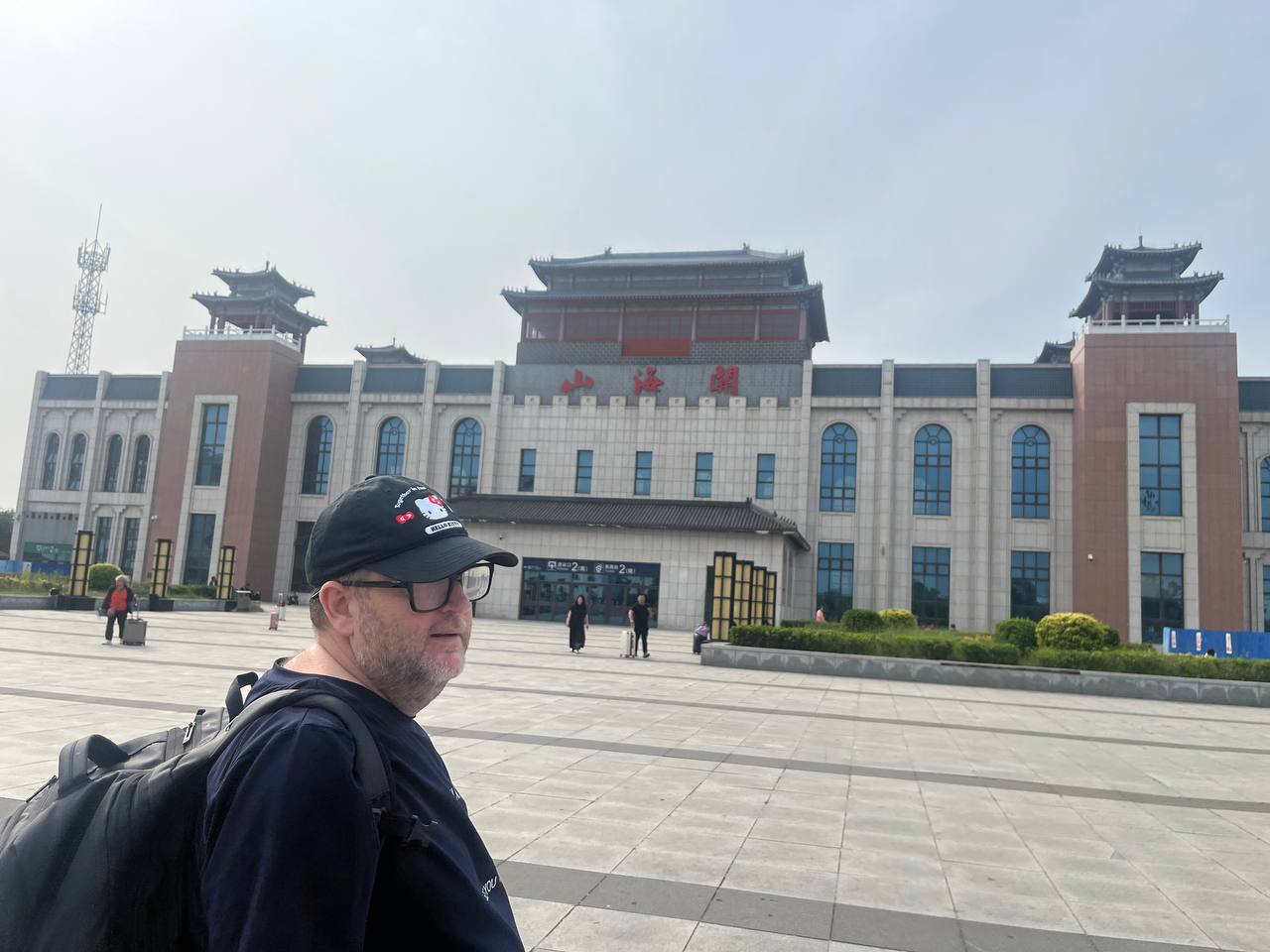
If you want to see the truly vast expanse that is China then taking the train in China is pretty much the best option when it comes to time, value, and sheer convenience. In fact, China’s network of high-speed trains and regular trains makes it probably the best functioning railway system in the world and the backbone of domestic travel.
Using the network though, while not difficult, more fits into the “easy if you know how” category. That means Chinese apps, station systems that feel like airports, and a few foreigner specific quirks that can catch you out if you’re not paying attention.
Here’s our guide on how to travel by train in China in 2026.
Table of Contents
Basic facts on Chinese Railway network
China’s railway system is absolutely massive and still expanding fast. It connects nearly every major city, most regional hubs, and even a lot of smaller towns that would otherwise be difficult to reach. High-speed rail dominates fast intercity travel, while conventional rail still handles long overnight routes and remote regions.
In most circumstances they beat flying marginally by price, but massively when it comes to practicality.
Key facts:
- Over 162,000 km of total railway track
- Over 48,000 km of high-speed rail
- More than 5,500 passenger stations
- Over 4 billion passenger trips per year (the most globally)
- Maximum speed: 350 km/h
- Every provincial capital connected by rail
- Most major cities linked in 4–8 hour corridors
- Operated by China State Railway Group
- Fastest-growing rail network in the world
Click to read about the Trans-Siberian Railway.

Regular vs Fast Trains in China
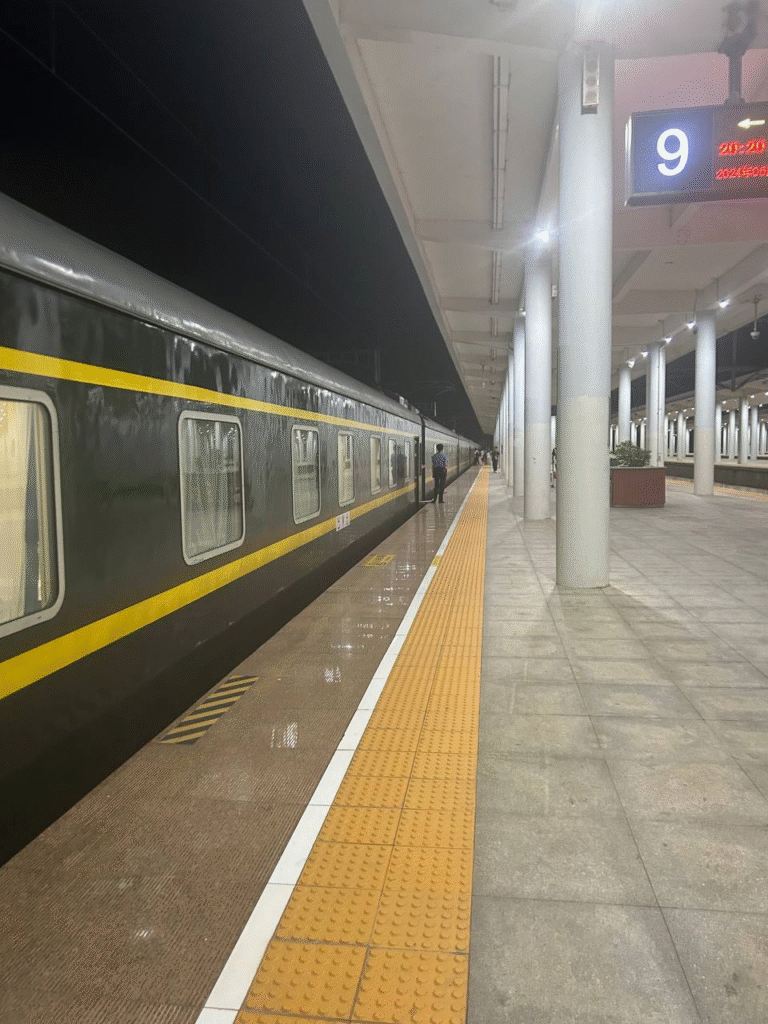
Regular trains (K, T, Z services) are the old-school backbone of China rail travel. They are slower, cheaper, and cover long distances with frequent stops. These are the trains where sleeper bunks, corridor conversations, and multi-day journeys still exist. They are basic, but they reach everywhere.
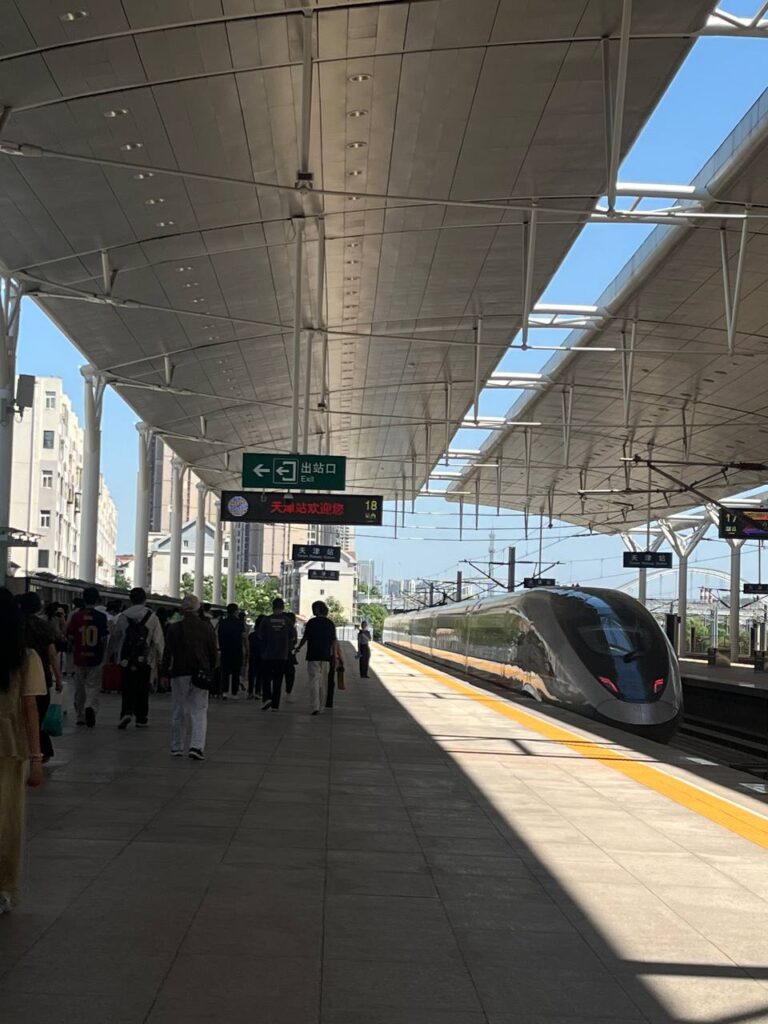
Fast trains (G, D, C services) are China’s high-speed system and feel like a completely different world. Dedicated lines, speeds up to 350 km/h, strict boarding times, and airport-style stations define the experience. They are clean, fast, predictable, and have replaced flying on many domestic routes under 1,500 km.
Train Classes and prices in China
When it comes to class in a “classless” society it is all about regular and fast trains, with them both operating their own systems.
Regular trains (slow trains)
Regular trains are split into standing tickets, seats, and sleeper classes. Standing tickets are the cheapest and usually only used when trains are full. Hard seats are basic upright seating. Hard sleepers are open bunk compartments and the most common long-distance budget option. Soft sleepers are enclosed cabins with four beds. Two-berth or deluxe sleepers exist on select routes and are significantly more comfortable. They are also relatively rare.
Beijing to Xi’an (~1,216 km):
- Standing: 120–150 RMB ($17–$21)
- Hard Seat: 140–170 RMB ($20–$24)
- Hard Sleeper: 260–360 RMB ($36–$50)
- Soft Sleeper: 400–550 RMB ($56–$77)
- Deluxe / 2-bed Sleeper: 700–1,000 RMB ($98–$140)
Cost rule: roughly 0.10–0.30 RMB per km depending on comfort level.
Fast trains (high-speed rail)
High-speed trains are much simpler. You basically get three classes and everything else is about legroom and silence.
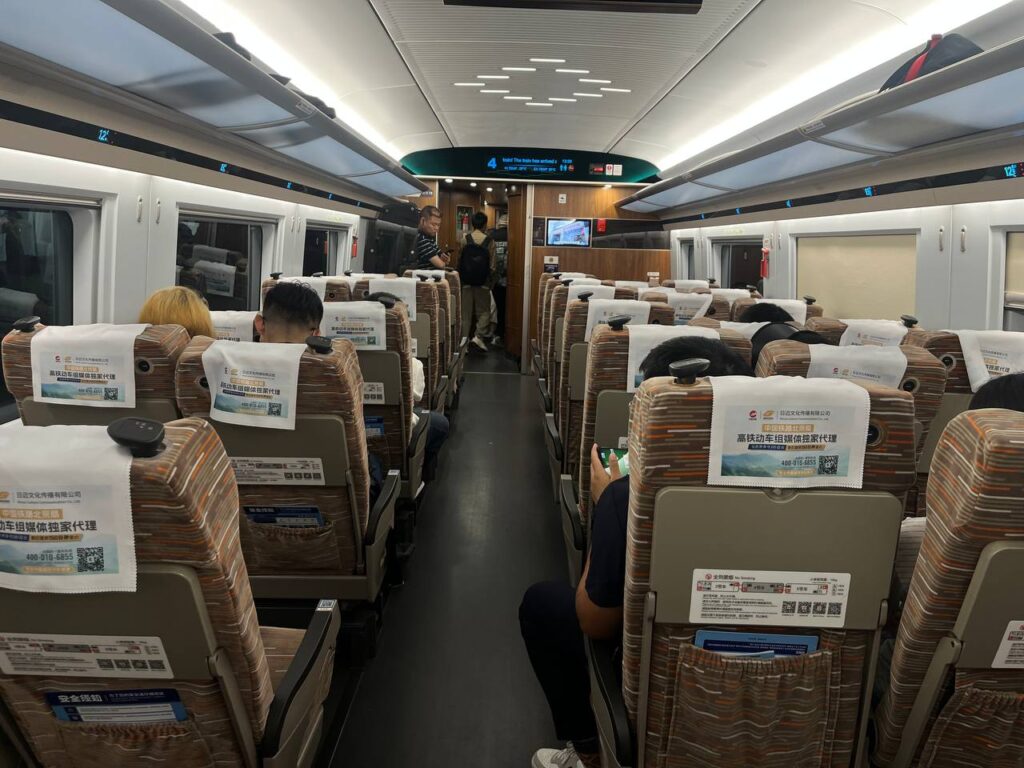
Second class is standard economy seating. First class gives you more space and fewer seats per row. Business class is premium seating with large recliners and quieter cabins.
Beijing to Xi’an (~1,216 km):
- Second Class: 470–600 RMB ($66–$84)
- First Class: 750–950 RMB ($105–$133)
- Business Class: 1,450–2,000 RMB ($203–$280)
Cost rule: roughly 0.40–1.80 RMB per km depending on class and demand.
High-speed rail often competes directly with domestic flights once you include airport transfers and waiting time.
Want to get Paid To Travel? Check this link.
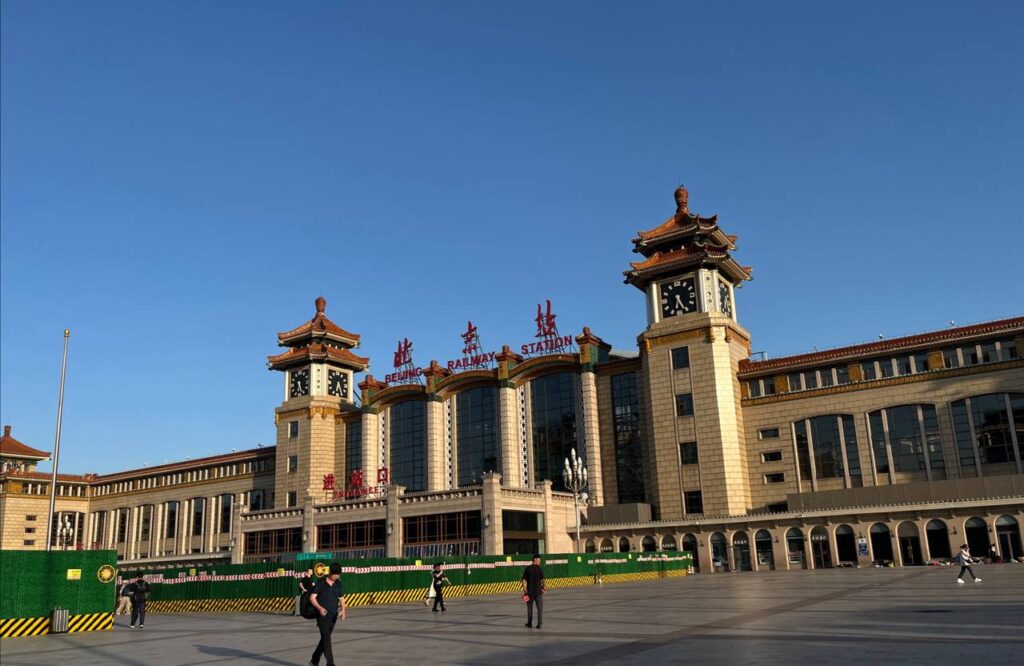
How to book tickets in China
Booking trains in China is simple once you know where to look, but peak travel periods like Chinese New Year or Golden Week can sell out fast.
Tickets are released 15 days before departure and popular routes go quickly.
Main apps and booking platforms:
- Trip.com (best for foreigners, English interface, international cards accepted)
- 12306 app (official system, Chinese language, most complete)
- 12306 website (Chinese only)
- WeChat mini programs (Chinese required)
- Alipay travel services (Chinese required)
- Fliggy (Chinese only)
- Qunar (Chinese only)
- Tongcheng (Chinese only)
Trip.com is the easiest and most reliable starting point for most international travellers using train travel in China.
How to take the train in China?
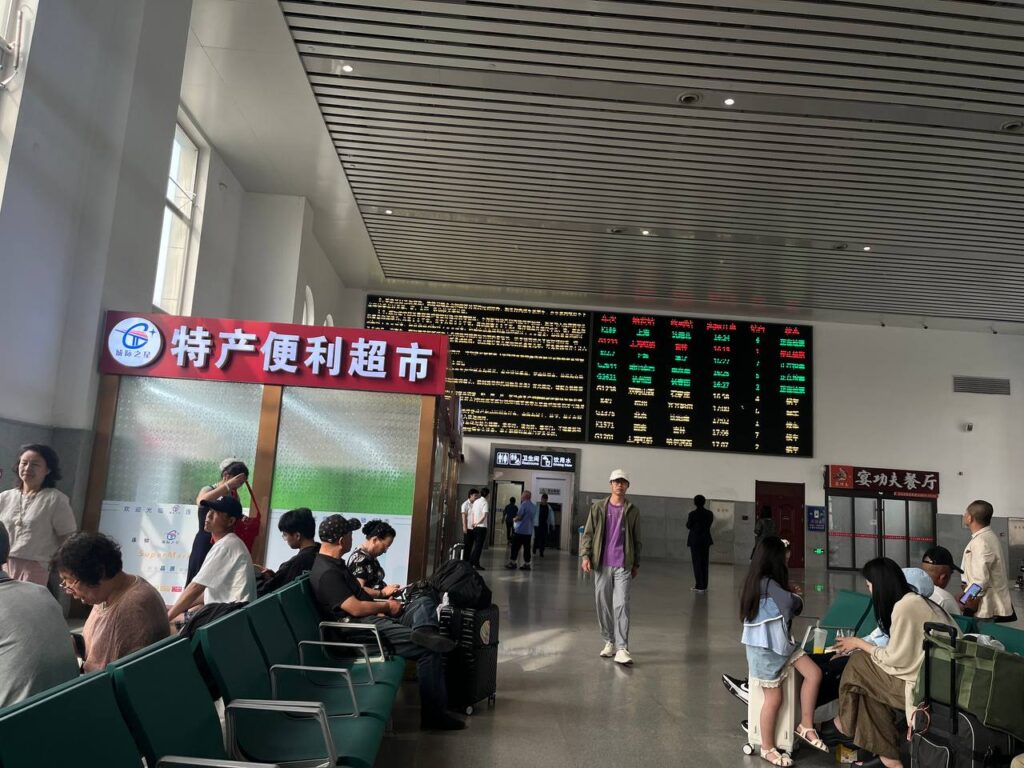
Train travel in China is extremely organised, especially high-speed rail, where the system works more like an airport than a railway station.
Key nuances:
- Passport is required for all train travel in China
- Foreigners cannot use automated ID gates
- Security checks are mandatory before entry
- Arrive 30–45 minutes before high-speed departures
- Stations are often huge and can be confusing
- Boarding gates close strictly before departure
- High-speed trains stop only 2–5 minutes per station (enough to smoke)
- Smoking is banned on all high-speed trains in China
- Older slow trains allow smoking between carriages
- Free boiling water is available on all trains
- Instant noodles are the default Chinese train food
- Tickets are fully electronic and linked to passport
International Trains from China
China’s international rail network is limited but still offers some of the most interesting overland train journeys in Asia. Most routes are conventional slow trains, with the exception of the modern China–Laos high-speed line.
Beijing to Ulaanbaatar (Mongolia)
One of the classic overland rail routes in Asia, running from northern China into Mongolia through vast industrial and steppe landscapes. The key feature is the border crossing at Erlian/Zamyn-Üüd, where immigration checks and a wheel gauge change take place due to different rail systems. This process can take several hours and passengers remain onboard.
Distance: ~1,550 km
Duration: 26–30 hours
How to book:
- CITS (China International Travel Service)
- Mongolian Railways ticket offices
- Selected international rail agents in Beijing
Kunming to Vientiane (Laos)
China’s newest international rail connection and part of the China–Laos Railway. This is a modern high-speed corridor that feels closer to domestic travel than traditional cross-border rail.
Distance: ~1,000 km
Duration: ~10 hours
How to book:
- Trip.com
- 12306
- Station ticket offices
Nanning to Hanoi (Vietnam)
A historic rail link between southern China and northern Vietnam via Dong Dang. Services depend on bilateral agreements and can vary.
Distance: ~400 km
Duration: 12–14 hours
How to book:
- Station ticket offices
- Approved travel agencies
Beijing to Pyongyang (North Korea)
Generally speaking this is a controlled route that you can’t just buy tickets for. Agents though, like my YPT can arrange tours which take in the train.
Distance: ~1,300 km
Duration: ~24 hours
How to book:
- DPRK authorised tour operators only/CITS if you have valid visa
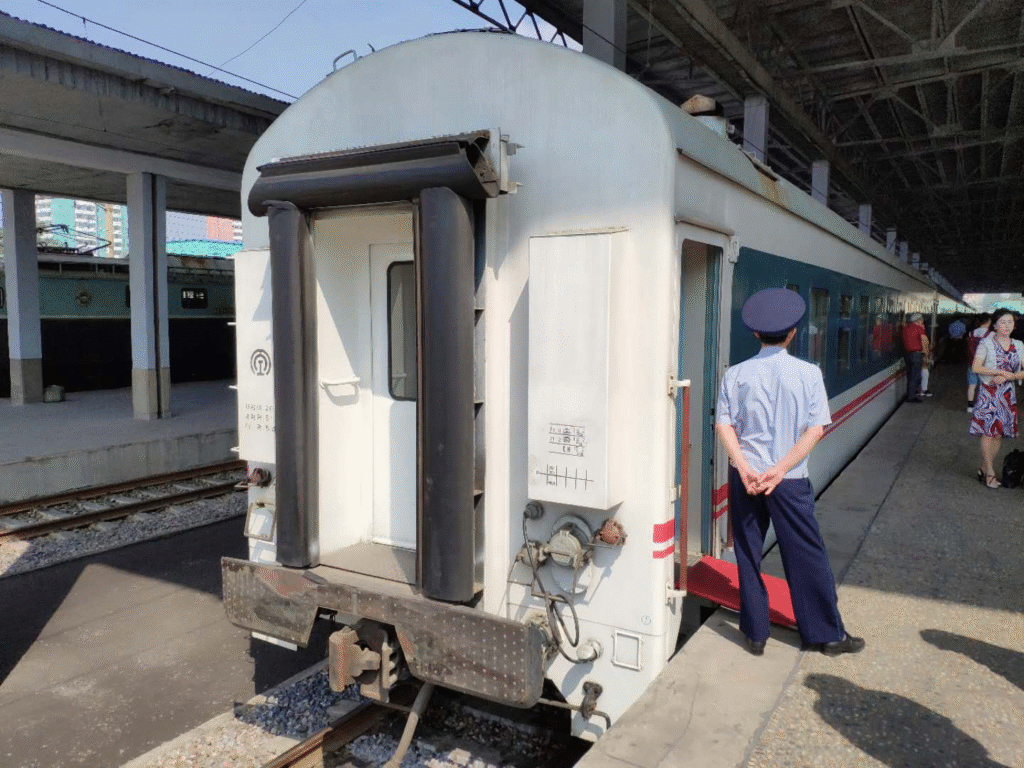
Dandong to Pyongyang (North Korea)
The shortest rail connection into North Korea, mainly used for organised groups, official crossings.and business people.
Distance: ~220 km
Duration: 5–6 hours
How to book:
- Authorised DPRK agencies only/CITS is you have correct visa.
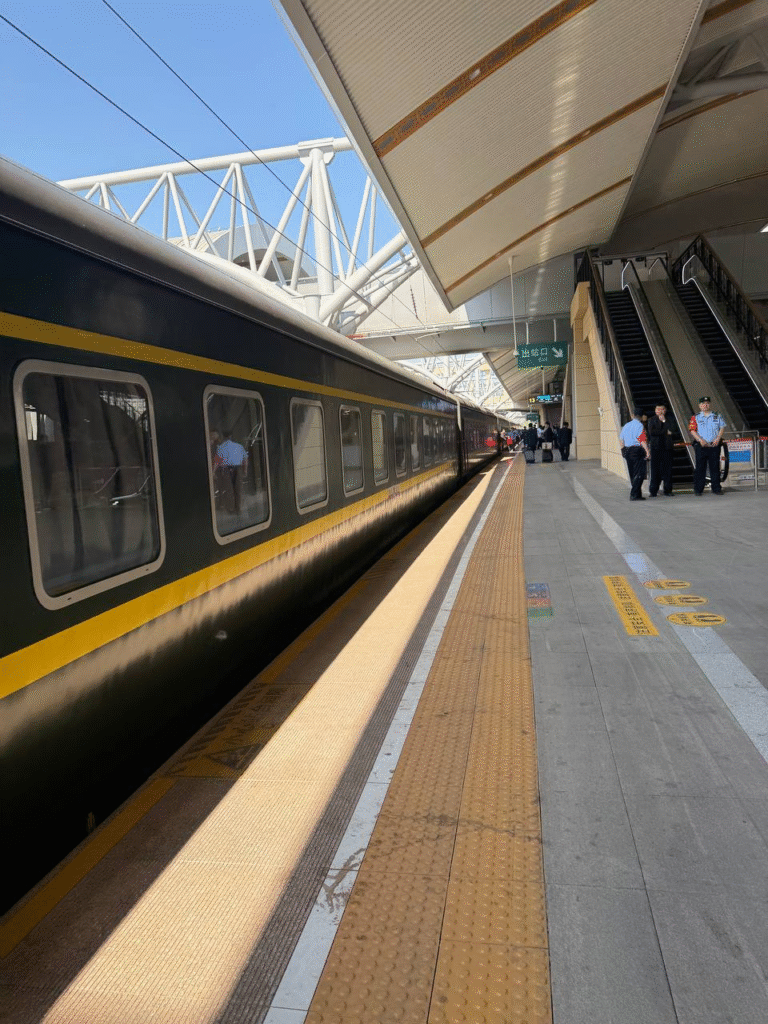
Urumqi to Central Asia
Western China connects into Kazakhstan and Uzbekistan via Xinjiang, forming part of the historic Silk Road rail corridor. These are long-distance conventional routes with variable frequency and less predictable schedules.
Distance: 1,000–3,000 km depending on route
Duration: 24–48+ hours
How to book:
Future railway links
China is actively developing a number of long-term rail projects that could eventually connect the country directly with neighbouring regions and beyond.
- Kyrgyzstan
- Thailand
- Malaysia
- Singapore
- Pakistan
- Russia
While some are under construction and others remain long-term plans, the direction is clear: China is steadily building the framework for a transcontinental rail network stretching across Eurasia as part of the whole Belt and Road thing.
Overall
To basically sum it up China’s trains are not as organized as say Japan, not as iconic as Russia, but also much less of a shit show than trains in India. In fact they hit the perfect soft-spot when it comes to scale, speed, and pure practicality. And honestly, there really is no better to travel around China.
Click to see my China Tours with YPT.